WHAT WE CREATE
Real Change.
Designed with intention.
Grounded in how adults learn. Shaped by your context. Designed for lasting impact. Every programme brings these principles to life in a way that is relevant, practical, and built to stay.
THINK
with curiosity.
Exploring creativity, strengthening problem-solving, and fostering curiosity to see beyond the
obvious.
WHY IT MATTERS
The challenges people face today are rarely straightforward. New situations, competing priorities,
and constant change require people to think beyond familiar answers and approach problems from
different angles.
THE UNFOLD APPROACH
Rather than teaching creativity and problem-solving as concepts, we create experiences that invite
exploration, experimentation, and reflection. Participants learn by engaging with challenges, testing
ideas, and discovering new ways of thinking.
Often used when teams need to
- Generate fresh ideas
- Solve complex problems
- Navigate uncertainty
- Challenge assumptions
- Build a culture of curiosity
Some themes worth exploring
- Creativity & Innovation
- Problem Solving
- Design Thinking
- Critical Thinking
- Decision Making
- Curiosity

ACT
with confidence.
Building the skills needed to communicate effectively, collaborate confidently, and lead with impact.
WHY IT MATTERS
Work happens through people. The quality of conversations, relationships, and interactions often
determines whether teams succeed, struggle, or grow together.
THE UNFOLD APPROACH
Instead of talking about communication, collaboration, or leadership in theory, we create
opportunities to practise them. Through real conversations, simulations, reflection, and feedback,
participants build skills they can use immediately in their day-to-day work.
Often used when teams need to
- Strengthen communication
- Improve collaboration
- Have better feedback conversations
- Build leadership capability
- Increase trust and accountability
Some themes worth exploring
- Communication Skills
- Feedback Conversations
- Team Building
- Managerial Skills
- Leadership Skills
- Influence & Stakeholder Management
- Executive Presence
GROW
with intention.
Creating development journeys where growth accumulates through practice, reflection, and real-
world application.
WHY IT MATTERS
Meaningful growth rarely happens in a single workshop. It develops over time through experience,
reflection, support, and opportunities to apply learning in real situations.
THE UNFOLD APPROACH
We design learning journeys that bring together experiences, application, and ongoing reflection.
Rather than focusing on short-term engagement, these journeys are designed to support
development that continues long after the experience itself.
Often used when teams need to
- Develop future leaders
- Support career transitions
- Build leadership pipelines
- Grow high-potential talent
- Create lasting behaviour change
Some themes worth exploring
- Emerging Leader Development
- First Time Manager Development
- Leadership Journeys
- High-Potential Programmes
- Career Transitions
WHY THIS WORKS
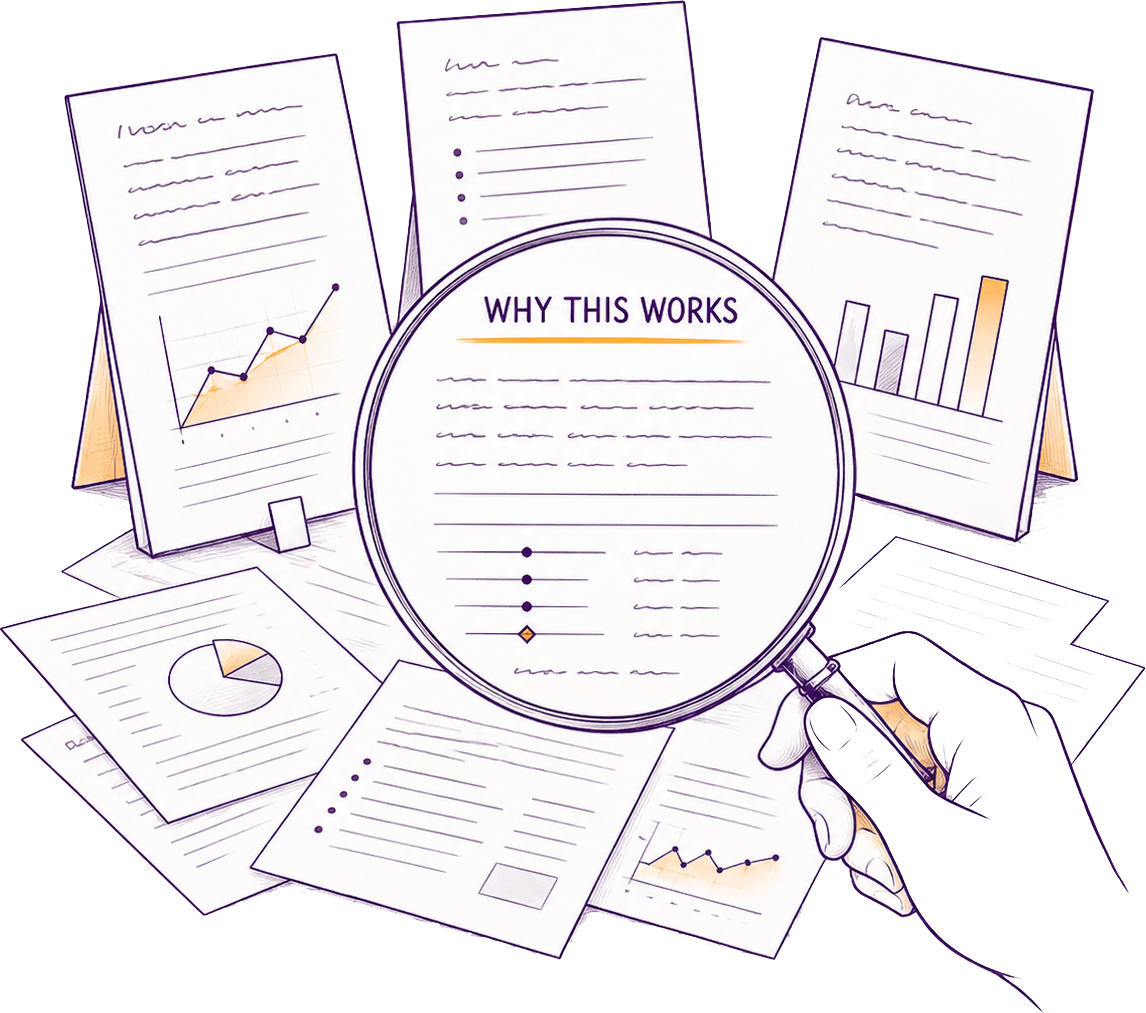
Decades of research point in the same direction.
Learning through experiences consistently produced better outcomes than traditional instruction.
Across 89 studies conducted over 43 years, experiential learning consistently outperformed traditional instruction, with learners achieving meaningfully stronger learning outcomes (d = 0.43).
Source: Burch, G. F., Giambatista, R., Batchelor, J. H., Burch, J. J., Hoover, J. D., & Heller, N. A. (n.d.). A Meta-Analysis of the Relationship between Experiential Learning and Learning Outcomes. https://eric.ed.gov/?id=EJ1224453
Questions we often get asked
FAQ's
Q1: What is experiential learning?
It’s learning through doing rather than listening. Instead of sitting through a presentation about
feedback, you practice giving difficult feedback in the room, with real pressure, real reactions, and
real reflection afterwards. The experience is the lesson. Most people remember what they lived
through far longer than what they were told.
Q2: Is this different from regular training?
Yes, in one specific way. Most training is designed around content delivery. A facilitator presents
information, participants receive it, everyone goes home. Experiential learning is designed around
what participants actually do in the room. The activities, the challenges, the conversations are not
warm-ups. They are the programme. The difference shows up not on the day, but in the weeks after.
Q3: Can you train my team remotely?
Yes. Experiential learning works online but it needs to be designed for it, not adapted from a
classroom format at the last minute. Virtual sessions with Unfold are built specifically for the online
environment. Shorter, more interactive, and structured so the energy doesn't drop after the first
hour. That said, some programmes work better in person.
Q4: What happens in a discovery call?
Thirty minutes. No deck, no pitch. Dipika will ask about what's going on, what you've tried, what isn't
working, and what you're hoping for. You'll ask whatever you need to. By the end, you'll both know
whether this is the right fit. If it is, a proposal follows. If it isn't, Dipika will say so and point you
somewhere better.
Q5: We already have an L&D team. Why would we need this?
Unfold works best alongside internal L&D teams, not instead of them. Your team knows the
organisation, the culture, the politics, the history of what's been tried. Dipika brings the design
expertise and facilitation depth that most internal teams don't have the bandwidth to develop. The
combination is usually better than either working alone. If your team has the capacity and the right
skills, Dipika will say so on the first call.
Q6: How do I know if my team needs training?
A few signals worth paying attention to. The same problems keep coming up in feedback cycles. A
team is technically strong but something isn't working in how they communicate or collaborate. A
manager has just been promoted and is visibly struggling. New people aren't settling in the way
you'd hope.